Accessible & walk-in baths
If stepping over a tub wall feels risky, an accessible bathroom can make daily life safer and easier. TileQuarter helps you plan the project and get matched, free, with licensed, insured remodelers you can compare yourself.
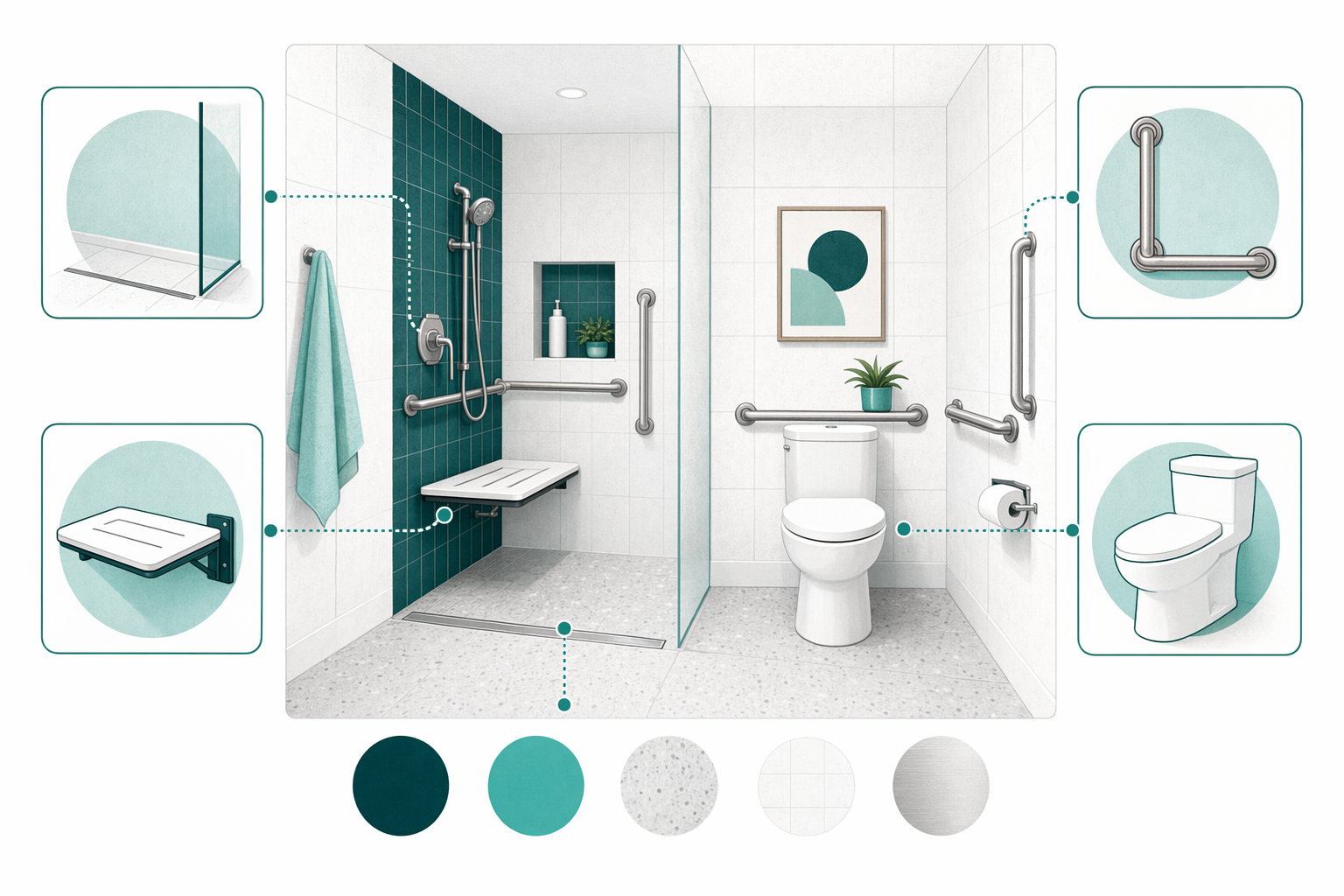
What an accessible bathroom remodel usually includes
An accessible remodel is about safer movement, easier bathing, and less strain. That can mean a simple change, like grab bars and a handheld shower, or a bigger remodel, like removing a tub and building a low-threshold shower.
Common upgrades include:
- Walk-in shower with a low curb or no-step entry
- Walk-in tub with a watertight door and built-in seat
- Grab bars at the shower, tub, and toilet
- Slip-resistant flooring and textured shower tile
- Comfort-height toilet
- Wider doorway for a walker or wheelchair
- Shower bench or fold-down seat
- Handheld showerhead on a slide bar
- Better lighting and easy-to-reach switches
- Vanity changes for knee clearance or easier use
A lot of homeowners start with the bathing area, because that is where falls and leaks often happen. If you are comparing options, it helps to review accessible bathroom ideas and project types before you decide between a shower, tub, or full remodel.
One truth many people learn too late: pretty tile is not the hard part. The hard part is what goes behind it. If a remodeler skips proper waterproofing, water can get into walls and floors and cause mold, rot, or framing damage. Always insist on real waterproofing behind the tile, not just grout and caulk.
How the process works with TileQuarter
TileQuarter is not a contractor. We are a free matching service for homeowners. We help you explain the project, then you compare licensed, insured, and bonded remodelers and choose who to hire.
- Tell us the basics. Share the bathroom size, your goals, and how the space needs to work for you or your family member.
- Get matched for free. We connect you with remodelers who handle bathroom projects in your area. Participating remodelers pay a flat fee to be included.
- Compare written estimates. You review scope, materials, labor, waterproofing details, and timeline.
- Vet each remodeler yourself. Verify license and insurance. Ask who will do the work, what permits may be required, and what products they plan to install.
- Choose who to hire. You control the decision, the contract, and the final payment.
You can start here: Get matched.
Before you sign with anyone, get the price and scope in writing before any deposit. Make sure the written scope says exactly what is being removed, what is being installed, who handles debris, what waterproofing system will be used, and what happens if hidden moisture or framing damage is found after demolition.
Typical cost ranges: what homeowners usually spend
Accessible bathroom remodel costs vary a lot. These are typical ranges and estimates, not quotes or guarantees. The real price depends on the size of the bathroom, the scope of work, the tile and fixtures, hidden moisture or framing damage, and your area.
Typical ranges many homeowners see:
- Minor safety refresh: about $3,000-$10,000
- Grab bars
- Handheld showerhead
- Comfort-height toilet
- New flooring or small fixture changes
- Tub-to-shower conversion: often about $4,000-$12,000
- Removing a tub
- Installing a low-threshold shower base or new shower area
- Basic wall surround or tile
- Mid-range accessible remodel: about $10,000-$25,000
- Shower upgrade
- New flooring
- Toilet and vanity changes
- Better lighting and storage
- Full gut remodel with layout changes: about $25,000-$50,000+
- Moving plumbing or walls
- Wider doorways
- Full tile work
- Custom shower, bench, and accessibility upgrades
A few honest cost notes:
- Tile and labor are often the biggest line items.
- Porcelain floor tile installed is often around $8-$25 per square foot.
- A walk-in tub can cost more than many people expect because of the product itself, plumbing needs, and electrical needs for some models.
- Custom no-threshold showers may require more floor prep and waterproofing work than a standard replacement.
For broader pricing context, see bathroom remodel costs and compare that with your bathroom size and wish list.
If one estimate is much lower than the others, look closely. Low bids often leave out demolition, subfloor repair, disposal, permit costs, waterproofing steps, or finish details.
Walk-in shower vs. walk-in tub: pros and cons
There is no one right answer. The best choice depends on mobility needs, bathing habits, available space, and budget.
Walk-in shower
Pros:
- Easier step-in access
- Faster in and out for many people
- Can include a bench, grab bars, and handheld shower
- Often works better in smaller bathrooms
- Usually easier for a caregiver to assist
Cons:
- A true curbless or very low-threshold entry may need more floor work
- Poor slope or bad waterproofing can cause leaks
- Some people still prefer soaking in a tub
Walk-in tub
Pros:
- Good for people who want to soak while seated
- Built-in door and seat
- Can feel more secure for some users
Cons:
- You usually must get in before filling and wait to drain before getting out
- Product cost can be high
- Some models need electrical work
- It may take up more room than expected
If your main goal is safer daily use, many homeowners lean toward a shower remodel. If bathing comfort is the top priority, a walk-in tub may make sense. If you are focused on the wet area, compare options on showers and tubs.
Whatever you choose, ask how the floor will be waterproofed, how slip resistance will be handled, and how the drain area will be built. That is where expensive mistakes happen.
Timeline and what can slow the project down
A simple safety update may take only a short visit or a few days. A full accessible remodel can take about 2-6 weeks of on-site work in many homes. Bigger projects can take longer.
What affects the timeline:
- Bathroom size
- Whether you are keeping the layout or moving plumbing
- Special-order fixtures, shower glass, or accessibility products
- Hidden water damage, mold, or framing issues found during demo
- Permit and inspection timing in your city or county
- Whether the home is occupied and how access is managed
Ask the remodeler for a step-by-step schedule, not just a finish date. A useful timeline should cover:
1. Demolition
2. Rough plumbing or electrical if needed
3. Framing or blocking for grab bars
4. Waterproofing
5. Tile or wall panel installation
6. Fixture installation
7. Punch list and cleanup
If permits are required, follow local rules and building code. Do not let anyone talk you into skipping that just to move faster. A permit may not be needed for every small update, but layout changes, plumbing work, electrical work, and some major remodels often trigger permit requirements. Read bathroom permits explained before work starts.
Questions to ask before you hire anyone
Use these questions to protect yourself and make quotes easier to compare:
- Are you licensed, insured, and bonded for this kind of bathroom remodel in my area?
- Will you give me your license number and proof of insurance so I can verify them myself?
- Have you built accessible showers or walk-in tubs like this before?
- Who will actually be in my home each day: employees or subcontractors?
- What waterproofing system will go behind the tile or wall panels?
- How will you handle the shower pan, drain connection, corners, niches, and seams?
- Will you add wall blocking for grab bars now, even if I add more later?
- What slip-resistant flooring options do you recommend for this bathroom?
- Will permits be required, and who will handle them?
- What is included in the written scope, and what is not included?
- What happens if you find hidden moisture or framing damage?
- What deposit is required, and what are the payment milestones?
Two must-haves:
- Get the scope and price in writing before any deposit.
- Hold final payment until the work is complete and you have walked the bathroom yourself.
For tile-specific questions, material tradeoffs, and cleaning concerns, it also helps to review the tile buying guide.
How to vet a remodeler and avoid the expensive mistakes
A smooth project is not just about finding a friendly person with a low price. It is about finding someone who does the hidden parts right.
Watch for these red flags:
- They cannot provide a license number or current insurance
- They push for a large cash deposit before giving a clear written scope
- They say grout, caulk, or cement board alone is enough waterproofing
- They are vague about permits
- Their estimate is one short line with no material or labor detail
- They avoid talking about who fixes hidden damage if demo reveals problems
What good vetting looks like:
- You compare at least 2-3 written estimates
- You verify license and insurance yourself
- You ask for a clear description of waterproofing, substrate prep, and cleanup
- You make sure the contract lists products, allowances, schedule, and payment terms
- You keep copies of all paperwork and change orders
This step matters even more for accessible remodels, because slopes, thresholds, drains, grab bar backing, and floor traction all affect safety. For a deeper checklist, read how to vet a bathroom contractor and pay close attention to the waterproofing section.
When you are ready, TileQuarter can help you start the comparison process without paying to use the service.
If you want a safer bathroom, start by deciding whether you need a walk-in shower, a walk-in tub, or simple safety upgrades. Then compare 2-3 written estimates, verify each remodeler’s license and insurance yourself, make sure real waterproofing is included, and do not pay the final amount until the job is finished and checked.