Bathroom permits & inspections explained
Permits can feel confusing, but they matter. The short version: if your bathroom project changes plumbing, electrical, ventilation, layout, or structure, you will often need permits and inspections under local code.
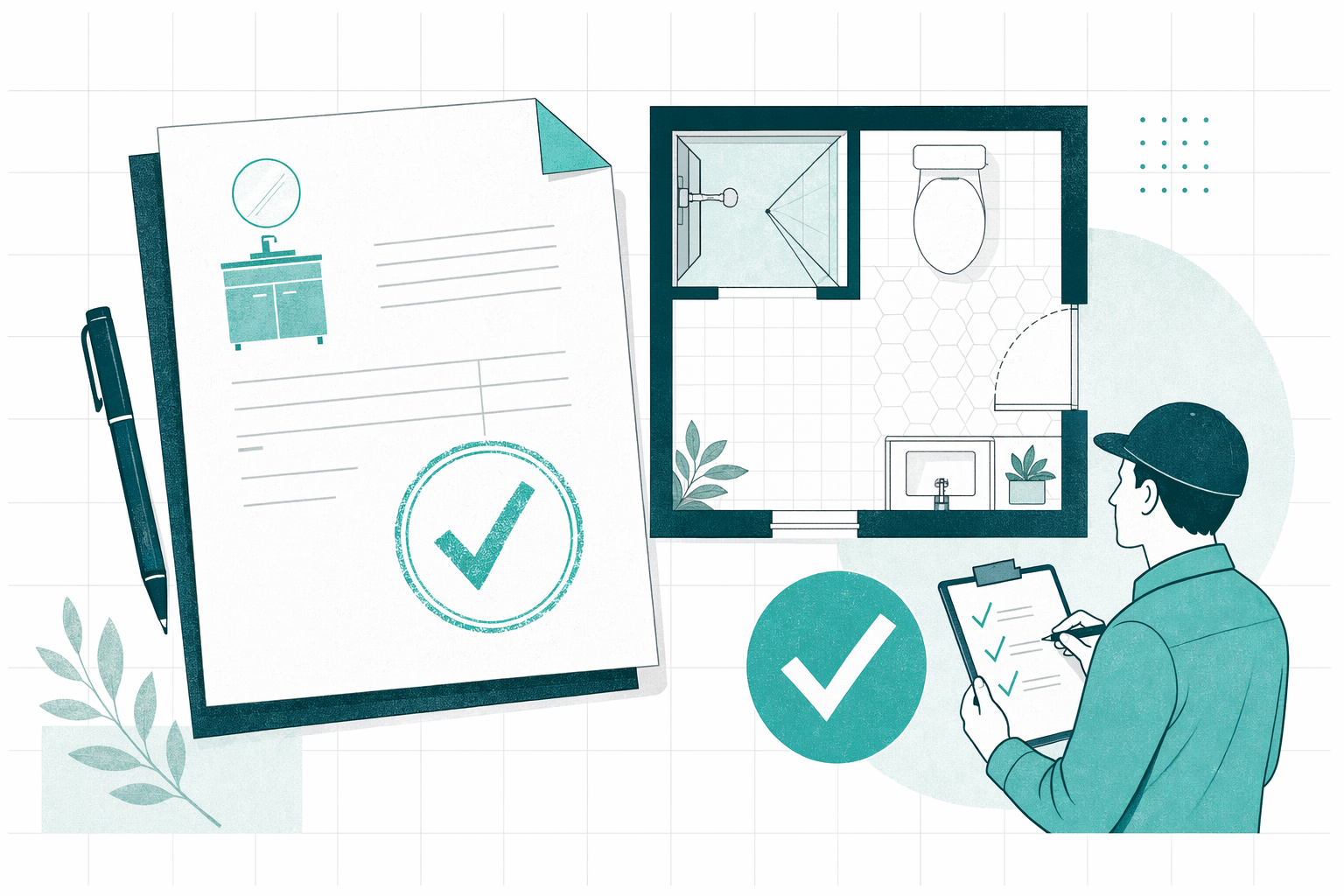
Why permits matter in a bathroom remodel
A permit is the city or county's way of checking that work follows local building code. An inspection is the check during or after the work. This is not just paperwork. In bathrooms, bad work can lead to leaks, mold, electrical hazards, failed drains, and expensive tear-outs later.
Homeowners sometimes hear, "You don't need a permit for this," or "We can save money if we skip it." Be careful. Skipping permits can create trouble when you sell the home, file an insurance claim, or discover hidden damage behind the tile.
In many areas, purely cosmetic work may not need a permit. For example:
- Painting
- Replacing a mirror or faucet like-for-like in some places
- Swapping accessories such as towel bars
But once a project touches systems behind the wall or under the floor, permits often come into play. A full gut remodel usually needs more oversight than a simple refresh. If you are still early in the process, get matched with licensed, insured, and bonded bathroom remodelers, then ask each one exactly what permits your local jurisdiction usually requires for your scope.
Bathroom work that often needs a permit
Rules vary by city, county, and state, so always check locally. Still, these are the kinds of bathroom jobs that often require permits and inspections:
1. Plumbing changes
- Moving a toilet, shower, tub, or sink
- Replacing or rerouting drain lines or supply lines
- Installing a new shower valve or converting a tub to a shower
2. Electrical changes
- New wiring, outlets, lights, switches, or heated floors
- Adding or changing GFCI protection
- Moving fixtures or adding a new exhaust fan circuit
3. Ventilation work
- Adding or replacing an exhaust fan
- Running new ducting to the exterior
4. Layout or structural changes
- Moving walls or doors
- Framing changes
- Any work that affects load-bearing parts of the home
5. Window work in wet areas
- Replacing or resizing a window in a tub or shower area may trigger code and permit issues
6. Accessibility upgrades
- Curbless showers, grab bars, widened doorways, and other safety changes can involve framing, plumbing slope, electrical, and waterproofing details
A basic tile replacement may or may not need a permit by itself. But if the old tile comes out and the shower is rebuilt, local code may treat that as more than cosmetic work. This is one reason to insist on real waterproofing behind the tile. Tile and grout are not the waterproof layer. Read waterproofing explained before you sign anything.
What inspectors usually look for
Inspectors are not there to choose your tile color. They are checking safety, code, and whether hidden work was done correctly before walls get closed up.
Common inspection points include:
- Plumbing: proper drain slope, venting, trap setup, leak-free connections, pressure balance or anti-scald shower valves where required
- Electrical: safe wiring, GFCI protection, correct box fill, proper fixture rating in wet or damp locations, spacing and clearances
- Ventilation: fan size, duct routing, and exhausting to the outside instead of into an attic or wall cavity
- Framing: safe cuts, notches, boring, and any structural changes done correctly
- Shower and tub areas: pan or flood test where required, waterproofing details, and code-compliant clearances
- Final inspection: fixtures installed, devices trimmed out, ventilation working, and the bathroom completed in a code-compliant way
A lot of homeowners are surprised that the rough inspection happens before drywall or backer board fully closes everything up. That is normal. If a contractor wants to cover plumbing, wiring, or shower waterproofing before the required inspection, stop and ask why.
If your project includes tile or flooring, costs can swing a lot based on material and labor complexity. See typical ranges on costs so you can compare bids with a clear head. They are only estimates. Real price depends on your bathroom size, your scope, the tile and fixtures you pick, hidden moisture or framing damage, and your area.
What to do before work starts
Use this checklist. It helps you avoid the most common permit problems.
1. Ask who is pulling the permit.
In many areas, the licensed contractor should pull it for the work they are responsible for. If someone asks you to pull a permit for work they are really doing, ask your local building department if that is appropriate.
2. Get the scope in writing.
The contract should say what is being replaced, what is being moved, what materials are included, and who handles permits, inspections, debris, and repairs if hidden damage is found.
3. Verify license, insurance, and bond yourself.
Do not just take a business card or text message as proof. Check the state or local license lookup and ask for current insurance information.
4. Ask about waterproofing by name.
What system is being used behind the shower tile? Where does it start and stop? Is there a pan liner, bonded membrane, or another code-accepted method? Will there be a flood test if required?
5. Ask for an inspection plan.
Which inspections are expected: plumbing, electrical, rough, final? About when will they happen?
6. Follow local permits and code.
Your city or county decides the actual rules. A good remodeler knows the local process, but you should still confirm.
7. Do not pay the full job cost up front.
Keep final payment until the work is completed as agreed and required final inspections are done.
If you need a starting point, TileQuarter is a free matching service. We help you compare licensed, insured bathroom remodelers for projects like full bathroom remodels and shower updates. You compare quotes, you choose who to hire, and you hold the final payment.
Common mistakes that cost homeowners money
These are the problems people regret later:
- Believing "tile is waterproof." It is not. The waterproof layer is behind the tile. If that layer is skipped or done badly, water can reach framing and subfloor.
- Choosing the lowest bid without comparing scope. One bid may include permits, waterproofing, debris haul-off, and code upgrades. Another may leave them out.
- No permit for moved plumbing or electrical. This can backfire during a sale or after a leak.
- Paying large deposits before materials are ordered or permits are addressed. Always get the price and scope in writing before any deposit.
- Not checking who will actually be on site. Ask whether employees or subcontractors will do plumbing, electrical, tile, and glass.
- No plan for hidden damage. Bathrooms often hide rotten subfloors, old leaks, mold, or framing issues. That changes cost and schedule.
- Assuming every tub-to-shower conversion is simple. Many are not. A typical range is often around $4,000-$12,000, but real price depends on size, tile choice, plumbing changes, waterproofing details, hidden damage, and your area.
For more questions to ask before you hire, read how to vet a bathroom contractor.
Your next step
Do not guess. Call your local building department or check its website and describe your exact project scope. Then ask each remodeler the same questions so you can compare apples to apples.
A smart next step is:
- Write down what is changing: tile only, fixtures only, shower rebuild, moved plumbing, new fan, heated floor, layout change
- Ask whether permits are usually required for that scope in your area
- Get at least 2-3 written estimates from licensed, insured, and bonded remodelers
- Verify the license and insurance yourself
- Confirm that waterproofing, permits, inspections, and cleanup are listed in writing
If you are planning a shower, tub, or full bathroom update, TileQuarter can help you compare local pros at no cost to you. Homeowners use our free service to get matched with remodelers, compare written estimates, and choose who they want to hire.
If your bathroom remodel changes plumbing, wiring, ventilation, walls, or the shower build, you will often need permits and inspections. Check local rules, hire licensed insured bonded remodelers, verify credentials yourself, insist on real waterproofing behind the tile, and get the full scope and price in writing before you pay a deposit.