Bathroom tile — porcelain vs ceramic vs stone
Bathroom tile can look great for years, or become a slippery, leaky money pit if the wrong material or install method is used. Here is the plain truth on porcelain, ceramic, and stone so you can choose the right tile and hire the right licensed, insured, and bonded remodeler.
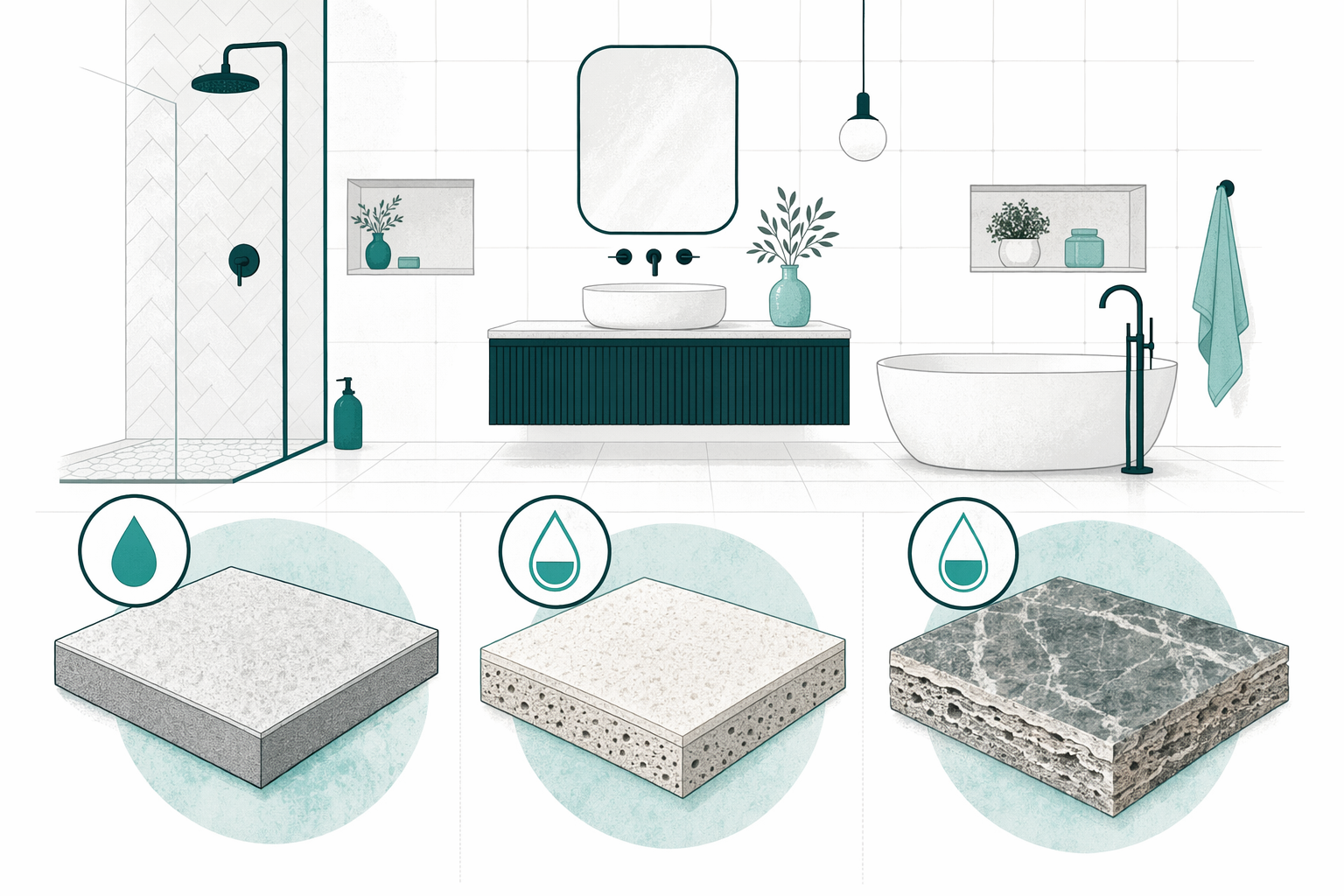
The short answer: what most homeowners should choose
For most bathrooms, porcelain is the safest bet. It is dense, durable, and handles water well when installed correctly. It works on floors, shower walls, and many shower floors. It also comes in many looks, including stone-look and wood-look styles.
Ceramic can also be a good choice, especially for walls and lower-budget projects. It is often easier to cut and can cost less than porcelain. But some ceramic tile is not as tough for busy bathroom floors.
Natural stone can be beautiful, but it needs more care, often costs more, and can be more likely to stain or need sealing. It is usually a better fit for homeowners who want the look badly enough to accept the upkeep.
The big warning: tile itself is not what keeps a shower waterproof. The waterproofing is behind the tile. If a remodeler skips or rushes that part, you can end up with mold, soft subfloors, and expensive tear-out later. Read waterproofing explained before you sign anything.
If you are still deciding between a simple refresh and a bigger remodel, see typical bathroom remodel costs. Real price depends on the size of the bathroom, the scope of work, the tile and fixtures, hidden moisture or framing damage, and your area.
Porcelain vs ceramic vs stone: honest pros and cons
### Porcelain
Best for: most bathroom floors, shower walls, many shower floors
- Pros: very durable, low water absorption, many sizes and styles, usually low maintenance
- Cons: often costs more than ceramic, harder to cut, some polished versions can be slippery
- Typical installed floor cost: often around $8-$25 per sq ft for porcelain floor tile installed, depending on tile price, layout, prep, and your area
Porcelain is usually the easiest recommendation because it gives you a lot of design options without the upkeep of stone. If you like a clean, durable bathroom that does not need much fuss, start here.
### Ceramic
Best for: bathroom walls, lower-cost floor projects, backsplashes
- Pros: often less expensive, lots of colors and styles, easier to cut and replace
- Cons: some products are less dense and less durable than porcelain, not every ceramic tile is a good floor tile
- Typical use note: always make sure the tile is rated for the location. A wall tile is not automatically a floor tile.
Ceramic can save money on a minor refresh. A good ceramic wall tile can look excellent. But on a floor, especially a family bathroom floor, ask your remodeler exactly why that tile is appropriate.
### Natural stone
Best for: higher-end looks, homeowners willing to do maintenance
- Pros: unique natural variation, upscale appearance, can add character
- Cons: usually higher material and labor cost, sealing may be needed, some stones stain or etch, some can be slippery
- Common types: marble, travertine, slate, limestone
Stone is not automatically better. In bathrooms, it can be more work and more risk. If you choose stone, ask what maintenance it needs, whether sealing is required, and how the surface performs when wet. A licensed, insured, and bonded remodeler should explain that clearly in writing.
What matters more than the material
Many homeowners spend all their time picking color and shape. That is normal. But these details affect daily life more:
1. Slip resistance
Choose floor tile with a surface that still has grip when wet. Tiny mosaic tile on shower floors often helps because there are more grout joints for traction. Large polished tile may look sleek, but it can be risky on a wet bathroom floor.
2. Tile size and layout
Large-format tile can give a clean look and fewer grout lines. But it can also show bad substrate prep quickly. Small tile can fit slopes better on a shower floor. The right size depends on where the tile goes.
3. Grout color and upkeep
Very light grout can show dirt. Very dark grout can show soap film. Ask what grout is being used and where. The goal is not just a pretty sample board. The goal is a bathroom that still looks decent a year later.
4. Subfloor and wall prep
Tile needs a stable surface. If the floor flexes too much, tile and grout can crack. If the walls are out of plane, large tile can look uneven. Hidden moisture or framing damage can add cost once demolition starts.
5. Real waterproofing behind the tile
This is the big one. Backer board alone is not enough. Showers need a real waterproofing system, installed correctly and tied into drains, corners, seams, and penetrations. Get the exact waterproofing method in writing before any deposit.
If your project includes a shower change, shower and tub upgrades often affect tile choice, slope, and waterproofing details.
How to choose the right bathroom tile without getting overwhelmed
Use this simple process:
1. Start with the room, not the showroom sample.
Think about who uses the bathroom. Kids? Older adults? Guests only? A busy bathroom needs durable, low-maintenance choices.
2. Choose the floor tile first.
Safety matters most on the floor. Look for something that is easier to keep clean and not too slippery when wet.
3. Then choose shower tile and wall tile.
These can be more design-driven, but still ask about maintenance, grout joints, and cleaning.
4. Ask for a written scope.
It should list tile areas, tile size, pattern, grout, waterproofing system, substrate prep, trim pieces, demolition, debris haul-away, and who handles permit-related work if needed. Follow local permits and building code. You can learn more at bathroom permits explained.
5. Compare estimates, not just bottom-line price.
A low estimate may leave out prep work, waterproofing details, or tile setting materials. That is how people get burned.
6. Verify license and insurance yourself.
Do not just take a business card at face value. Hire licensed, insured, and bonded remodelers, and verify the license and insurance yourself before work starts.
If you want help finding companies to compare, get matched with local bathroom remodelers. TileQuarter is free for homeowners. Participating remodelers pay a flat fee. You compare estimates, choose who to hire, and hold the final payment.
Common tile mistakes that cost homeowners later
These are the problems that come up again and again:
- Picking polished floor tile because it looks expensive
It may be too slippery for a wet bathroom.
- Using wall tile on a floor
Not every tile is made for foot traffic.
- Thinking expensive tile means a better install
A cheap tile installed well can last longer than luxury tile installed badly.
- Ignoring waterproofing details
Pretty shower tile does not stop water. The waterproofing system does.
- Buying tile before confirming lead times and overage
Discontinued dye lots and damaged boxes can delay a job. Ask how much extra tile should be ordered.
- Choosing tiny grout lines on uneven walls or floors
It can make lippage and layout problems more obvious.
- Paying a deposit without a clear written scope
Get price and scope in writing before any deposit. That includes prep work, waterproofing, tile installation areas, and who is supplying what.
- Not planning for transitions and trim
Edge profiles, threshold height, shower niche tile layout, and fixture cutouts should be thought through early.
For bigger projects, a full bathroom remodel often brings these choices together with vanity, tub, shower, lighting, and flooring decisions.
Your next step
Pick 2 or 3 tile directions, not 20. For example: a matte porcelain floor, a simple ceramic wall tile, and one accent option. Then ask each remodeler the same questions so you can compare apples to apples:
- Is this tile right for bathroom floors, shower walls, or shower floors?
- What waterproofing system will you use behind the shower tile?
- What prep is included if you find uneven walls, soft subfloor, or moisture damage?
- What tile labor, grout, trim, and demolition are included in the estimate?
- Will permits be required under local rules?
Keep your focus on safety, waterproofing, and written scope. The exact tile style matters, but not as much as a solid installation.
If you want help comparing local pros, TileQuarter can help you get matched at no cost with licensed and insured bathroom remodelers. You compare estimates, verify license and insurance yourself, and decide who to hire.
For most bathrooms, start with porcelain, use slip-resistant floor tile, and pay close attention to waterproofing behind the tile. Get 2 to 4 written estimates from licensed, insured, and bonded remodelers, verify their license and insurance yourself, and compare the full scope before you pay any deposit.