Where your bathroom budget actually goes
Bathroom remodels get expensive fast because you are paying for many small jobs in a very tight space. The biggest costs are usually labor, tile work, fixtures, and the hidden work you do not see, especially waterproofing and moisture damage.
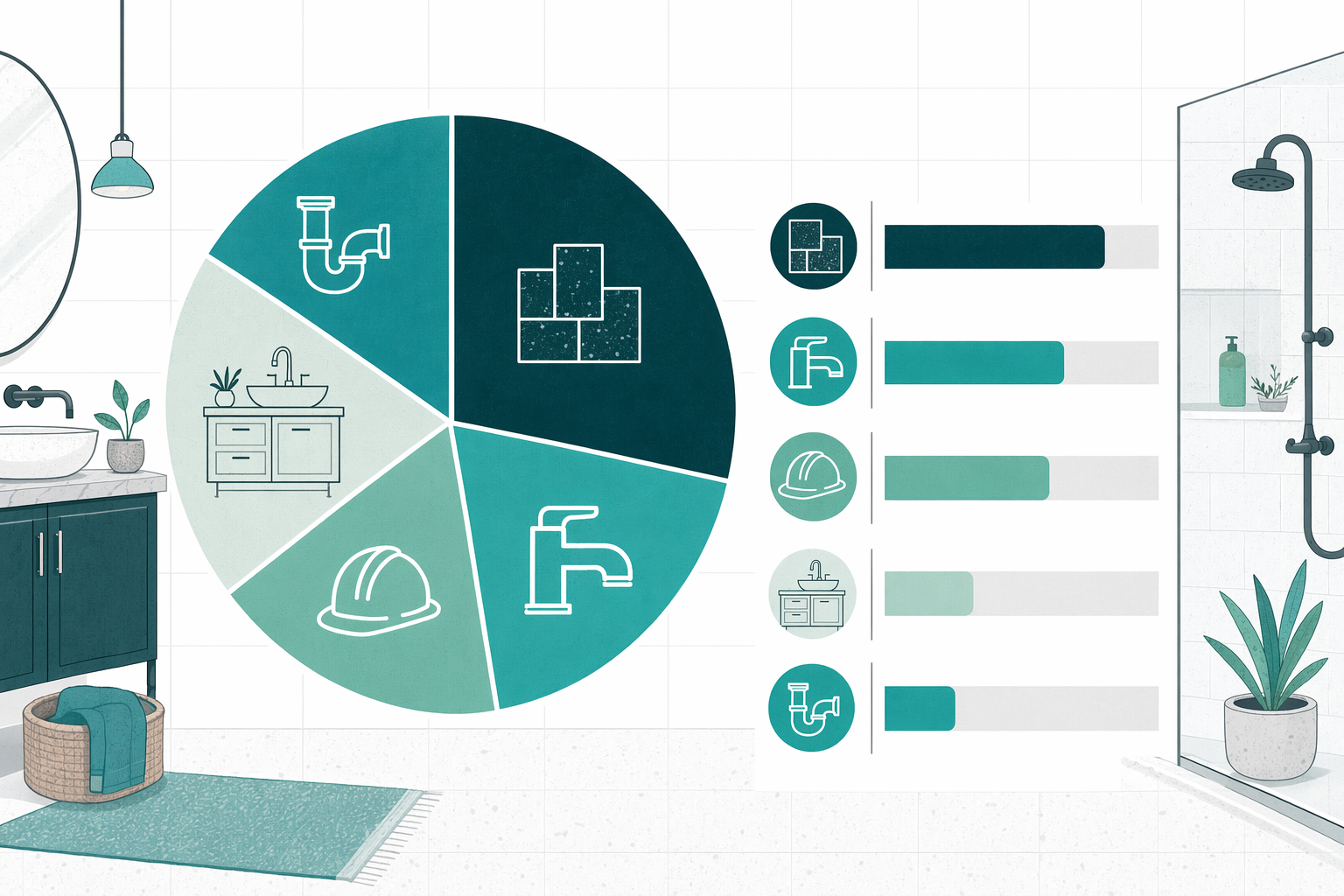
The honest breakdown: what you are really paying for
A bathroom is one of the most labor-heavy rooms in the house. Even a small bathroom can involve demolition, hauling debris, plumbing changes, electrical updates, framing fixes, waterproofing, tile setting, trim, paint, and finish installation. That is why the price can climb even when the room is not big.
Typical total project ranges for US homeowners are:
- Minor refresh: about $3,000-$10,000
- Mid-range remodel: about $10,000-$25,000
- Full gut remodel: about $25,000-$50,000+
Those are estimates, not quotes. Your real price depends on the bathroom size, the scope of work, the tile and fixtures you choose, hidden moisture or framing damage, and your area.
In many projects, your budget goes into a few main buckets:
- Labor: often the biggest share
- Tile and setting materials: tile, thinset, grout, trims, underlayment
- Fixtures and finishes: vanity, toilet, tub, shower valve, glass, lighting, fan
- Behind-the-wall work: plumbing, electrical, framing, waterproofing
- Permits and inspections: when required by local code
- Demo and disposal: removing old materials and hauling them away
If you want a closer look at common price ranges, start with costs and then compare them to your own room and wish list.
The big budget buckets most homeowners underestimate
Some items look small on paper but hit hard once labor and materials are added.
1. Tile work
Tile is not just the tile you see. You are also paying for layout, cuts, edges, leveling, mortar, grout, trim pieces, backer materials, and labor. Fancy patterns, large-format tile, niches, benches, and full-height shower walls all add time.
A common installed range for porcelain floor tile is about $8-$25 per square foot. Wall tile and custom shower work can cost more.
2. Waterproofing
This is the part that saves you from leaks and mold. Good waterproofing is behind the tile, not just on the surface. If someone skips this step to make the price look cheap, you may pay much more later. Read waterproofing explained before you compare bids.
3. Plumbing changes
Keeping the toilet, tub, and sink in the same place usually costs less. Moving drains or supply lines can raise labor fast, especially in older homes.
4. Glass, vanities, and fixtures
Homeowners often focus on tile and forget the finish costs. A vanity, mirror, lighting, fan, faucets, shower trim, toilet, and glass door can take a big chunk of the budget.
5. Surprises behind the walls
Bathrooms hide problems. Common ones are:
- Wet subfloor under the toilet or tub
- Rotten studs near old shower leaks
- Out-of-level floors
- Old plumbing that should be updated
- Venting or electrical issues that need code corrections
This is why a low early number is not always a real number. It may just mean the scope is missing things.
Typical examples by project type
Here is how money often gets spent in real-life bathroom projects.
Minor refresh: $3,000-$10,000
This usually means keeping the layout and avoiding major plumbing moves.
- New paint
- New vanity or top
- New toilet and basic fixtures
- New lighting or fan
- Limited tile or flooring update
- Small repairs
This level can make the room feel cleaner and newer, but it may not fix deeper shower or waterproofing issues.
Mid-range remodel: $10,000-$25,000
This is where many standard family bathrooms land.
- Replace tub or shower area
- New tile floor and shower walls
- New vanity, toilet, lighting, mirror
- Some plumbing and electrical updates
- Proper waterproofing in wet areas
- Permit-related work where required
A tub-to-shower conversion often falls around $4,000-$12,000, but the real price depends on size, drain location, wall condition, tile choice, glass, fixtures, waterproofing, and your area. If that is your main goal, see shower and tub.
Full gut remodel: $25,000-$50,000+
This usually includes tearing the room back to the framing or close to it.
- Full demolition
- Repairs to framing or subfloor if needed
- Plumbing and electrical changes
- New shower or tub system
- Full tile package
- Vanity, storage, lighting, glass, accessories
- Finish work and painting
If you are redoing nearly everything, a full bathroom remodel page can help you think through the scope before you talk to remodelers.
How to compare prices without getting fooled
A cheap-looking price can turn into the most expensive job if the scope is vague. The safest way to compare is to make each remodeler price the same job.
Ask for the following in writing before any deposit:
- Exact scope of work
- What is being demolished and removed
- Brand or allowance for tile, vanity, toilet, faucets, and lighting
- Waterproofing method behind the tile
- Whether plumbing or electrical changes are included
- Who handles permits if permits are required
- Estimated timeline
- Payment schedule tied to milestones
- What happens if hidden damage is found
Also protect yourself with these rules:
- Hire licensed, insured, and bonded remodelers
- Verify the license and insurance yourself
- Follow local permits and building code
- Do not rely on verbal promises
- Hold final payment until the punch list is done
A good bid is not always the lowest one. It is the one that clearly shows what you are paying for.
If you want help finding companies to compare, get matched with licensed and insured bathroom remodelers. The matching service is free to homeowners. You compare quotes, you choose who to hire, and you control the final payment.
Common budget mistakes that cost people later
Most bathroom budget problems come from a few repeat mistakes.
Skipping waterproofing questions
If the bid does not say how the shower or tub area will be waterproofed, ask. Tile and grout are not enough by themselves.
Choosing finishes before checking labor impact
A tile may fit your material budget but still raise labor because of pattern, size, or difficult cuts. The same goes for niches, curbless entries, and custom glass.
Moving everything at once
Shifting the toilet, shower, and vanity can push the job into a much higher range. If budget matters, keep the layout when possible.
Not planning a damage cushion
In older bathrooms, hidden damage is common. Leave room in your budget for repairs instead of spending every dollar on visible finishes.
Paying too much too early
Get the price and scope in writing before any deposit. Make sure payment stages are clear.
Ignoring permits
If plumbing, electrical, or structural changes trigger permits in your area, follow local rules. This protects you later when selling the home or dealing with insurance. Our bathroom permits explained guide can help you ask better questions.
The smart move is simple: compare detailed bids, verify credentials yourself, and do not let anyone rush you.
Bathroom remodel money usually goes to labor, tile, fixtures, waterproofing, and hidden repairs. Get detailed written estimates from licensed, insured, and bonded remodelers, verify credentials yourself, ask exactly how waterproofing will be done behind the tile, and keep the layout if you want to control costs.