Bathroom waterproofing explained
Tile and grout are **not** the waterproof layer. A bathroom stays dry because a licensed remodeler builds a real waterproof system behind the tile, at the shower pan, and around corners, seams, and plumbing openings.
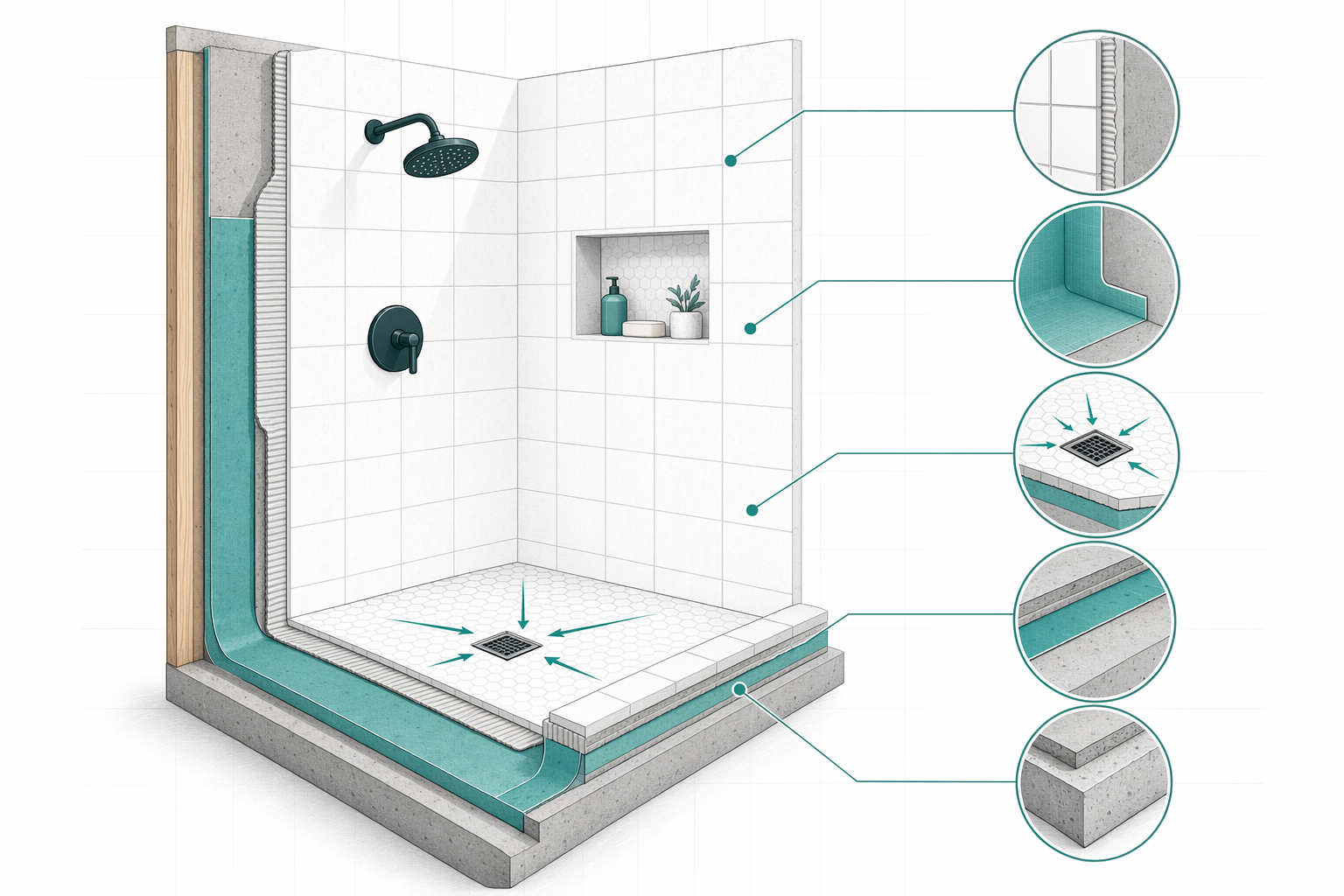
What bathroom waterproofing really means
When people say a bathroom is waterproof, they often mean the tile looks finished and sealed. That is not enough. Tile, grout, and caulk help shed water, but they are not the main protection. Water can still get through joints, small cracks, and movement over time.
A proper bathroom waterproofing system is the layer behind the tile or under the surface that directs water where it should go and keeps it away from framing, drywall, and subfloors. In a shower, that usually includes a waterproof membrane on the walls, a properly built shower pan or shower tray, sealed seams and corners, and careful treatment around niches, benches, curbs, and valves.
If that system is skipped or done badly, the damage can stay hidden for months. Then you may see soft drywall, loose tile, swollen trim, mold smell, stained ceilings below, or rotten subfloor. By then, the repair is often much more expensive than doing it right the first time.
If you are planning a remodel, read waterproofing basics and compare the written scope from a few licensed, insured, and bonded pros. TileQuarter is a free matching service. We help you connect with remodelers. You compare quotes and choose who to hire.
Where waterproofing belongs in a bathroom
Not every inch of a bathroom is treated the same way. The wettest areas need the most protection.
Highest-risk areas:
- Shower walls and floor: These need a complete waterproof system, not just cement board and tile.
- Tub/shower surrounds: The wall area around a tub used for bathing needs waterproofing behind the tile or wall panels.
- Curbs, benches, and niches: These fail a lot because they have many corners and seams.
- Plumbing penetrations: Openings for the shower valve, tub spout, shower head, body sprays, and drains must be sealed correctly.
- Bathroom floor in some layouts: A full floor waterproof layer is not always used in every bathroom, but it can be smart in small baths, curbless showers, accessible baths, or homes with kids, aging-in-place needs, or frequent splash-out.
Areas that still need moisture awareness:
- Vanity backsplashes
- Around toilets
- Around windows in wet zones
- Transition points where different materials meet
A licensed remodeler should explain what system they use and exactly where it goes. If you are also choosing finishes, tile and flooring options matter because some layouts and tile sizes affect slope, grout joints, and how water moves.
The main waterproofing methods homeowners should know
You do not need to become a contractor, but you should know the basic types so you can ask better questions.
1. Sheet membranes
These are factory-made waterproof sheets installed over the proper substrate, with seams sealed. They can be very reliable when installed carefully.
2. Liquid-applied membranes
These are rolled, brushed, or troweled on to form a waterproof layer. They must be applied at the correct thickness and usually need proper curing time. Too thin is a common problem.
3. Traditional shower pan systems
These often use a liner under a mortar bed. They can work well, but only if the slope, drain assembly, corners, and weep holes are done correctly.
4. Foam shower systems or integrated shower trays
These can be part of a complete waterproof shower system when matched with the right drain and wall waterproofing.
What matters most is not the brand name. It is whether the installer follows a complete system, with compatible parts, proper slope to the drain, sealed seams, flood testing where required, and real attention to corners and penetrations.
If you are doing a shower or tub project, ask the remodeler to write down:
- The substrate they will use
- The waterproofing method
- How they waterproof niches, benches, and curbs
- How the shower pan is built
- Whether they do a flood test if local code or the system requires it
- Who pulls permits if your area requires them
What to ask before you hire a remodeler
This is where homeowners protect themselves. Keep it simple and get the answers in writing.
Ask these questions:
- Are you licensed, insured, and bonded for this type of bathroom remodel work in my area?
- Will you provide your license number and proof of insurance so I can verify it myself?
- What exact waterproofing system do you use behind the tile?
- How do you waterproof corners, niches, benches, curbs, and plumbing openings?
- How do you build and slope the shower pan or shower floor?
- Will permits be required here, and who handles them?
- What is included in the written scope before any deposit?
- What is excluded?
- What happens if hidden moisture, mold, subfloor, or framing damage is found?
Red flags:
- They say grout sealer is the waterproofing.
- They cannot clearly explain the waterproof layer.
- They want a large deposit before giving a detailed written scope.
- They tell you permits are never needed without checking your local rules.
- They dismiss waterproofing around niches, benches, or curbs.
- They refuse to show license or insurance details.
Use a simple paper trail. Get the price range, scope, materials, waterproofing method, cleanup, timeline, and payment schedule in writing before any deposit. Then verify license and insurance yourself and review how to vet a bathroom contractor. Follow local code and permit rules.
Common mistakes that lead to leaks and expensive tear-outs
Most bathroom leak problems come from a short list of mistakes. Homeowners usually do not see them until the tile is already on the wall.
- No real waterproof membrane behind the tile
Cement board alone is not a waterproof system.
- Bad shower slope
Water should move to the drain. Poor slope leaves standing water and stresses grout and corners.
- Weak curb construction
Curbs get stepped on, splashed, and cracked. They need careful waterproofing.
- Unsealed seams and corners
Water finds joints fast.
- Poorly detailed niches and benches
These are common leak points because they interrupt flat wall surfaces.
- Improper drain connection
The drain must work with the shower waterproofing system.
- Skipping movement joints and proper sealant where needed
Bathrooms move with heat, moisture, and normal building settling.
- Rushing the job
Some products need cure time. If tile goes on too soon, problems can follow.
These mistakes are one reason costs can swing so much in a remodel. A minor bathroom refresh may run about $3,000-$10,000, a mid-range remodel often falls around $10,000-$25,000, and a full gut remodel can be $25,000-$50,000+. A tub-to-shower conversion is often roughly $4,000-$12,000. Porcelain floor tile installed is often around $8-$25 per square foot. These are typical ranges, not quotes or guarantees. The real price depends on the size of the bathroom, the scope of work, the tile and fixtures, hidden moisture or framing damage, and your area.
Waterproofing is not usually the flashiest line item, but skipping it can turn a normal remodel into a tear-out.
What to do next if you are planning a remodel
You do not need to know every technical detail. You just need a clear process.
1. Decide your project scope
Are you doing a surface update, a tub-to-shower conversion, or a full gut remodel?
2. Make a short must-have list
Example: walk-in shower, niche, bench, non-slip tile, easy cleaning, or accessible layout.
3. Get multiple written estimates
Compare waterproofing details, not just the total number.
4. Verify license and insurance yourself
Do not rely only on a verbal claim.
5. Confirm permits and code requirements
Follow your local rules.
6. Do not release final payment until the job is complete
You choose who to hire, and you hold the final payment.
If you want help finding remodelers to compare, use free matching. TileQuarter does not remodel bathrooms or give construction, plumbing, structural, electrical, legal, or financial advice. We help homeowners connect with participating licensed and insured bathroom remodelers. Matching is free to the homeowner, and participating remodelers pay a flat fee.
Do not assume tile is waterproof. Ask each licensed, insured, and bonded remodeler to show you the waterproofing system in writing, verify their license and insurance yourself, follow permits and code, and compare more than one estimate before you choose.