Small Bathroom Remodel Ideas That Work
A small bathroom can work a lot better without becoming a huge project. The best upgrades are usually simple: better layout, smarter storage, lighter finishes, and real waterproofing behind the tile.
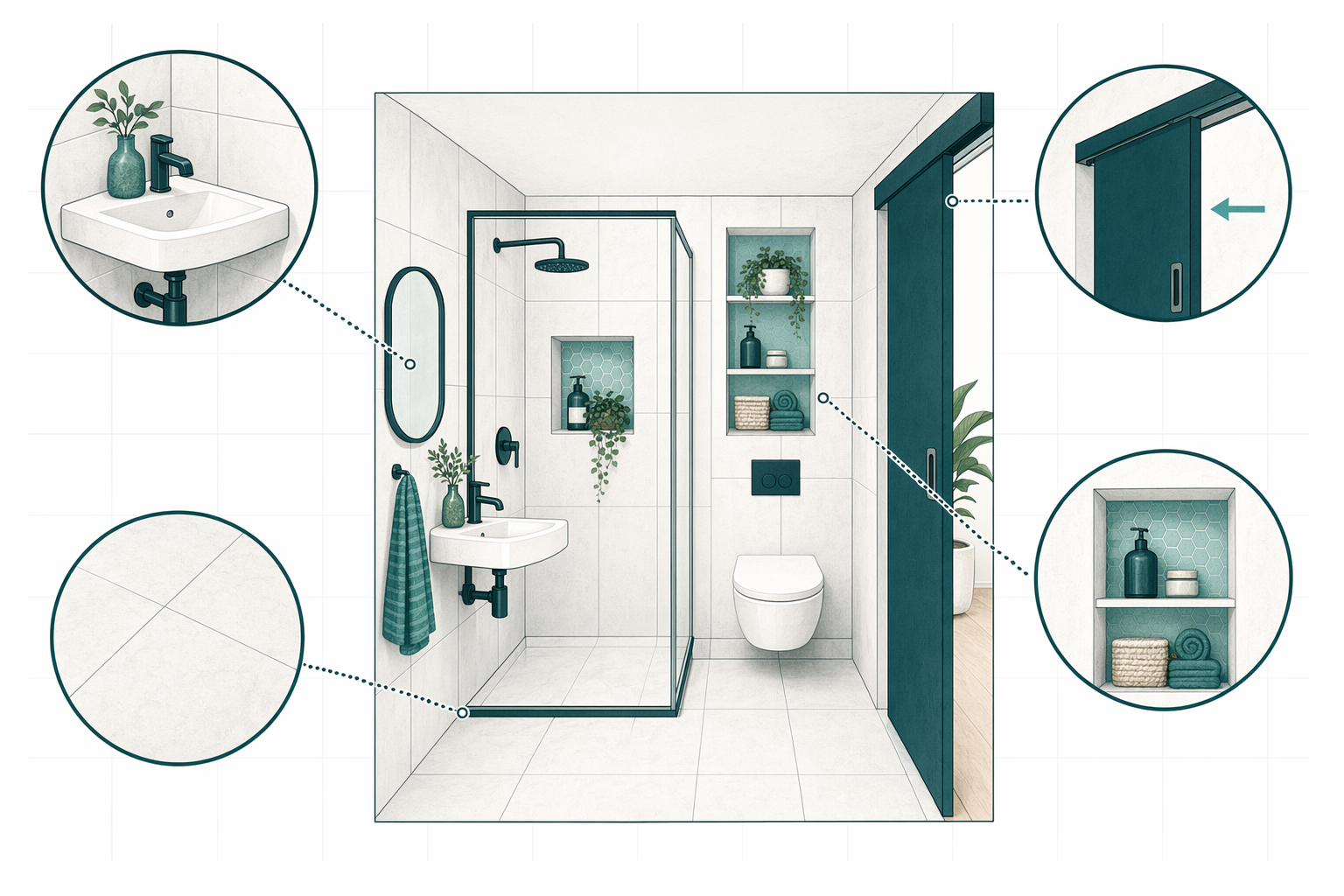
The short answer: make the room feel bigger, not just look busier
In a small bathroom, every inch matters. The ideas that usually pay off are the ones that improve clear floor space, storage, and easy cleaning.
A few changes often make the biggest difference:
- Swap a bulky vanity for a smaller vanity or a wall-mounted sink if storage is not critical.
- Replace a shower curtain with a clear glass door or panel so the room feels more open.
- Use large-format tile or simple tile patterns instead of many small cuts and busy borders.
- Add a recessed medicine cabinet or shower niche so storage goes into the wall, not into the walkway.
- Choose light colors and one or two finishes instead of mixing too many materials.
- If the tub is rarely used, a tub-to-shower conversion can free up function and make the room easier to enter.
Typical remodel costs are still real, even in a small room. A minor refresh may land around $3,000-$10,000. A mid-range remodel is often $10,000-$25,000. A full gut remodel can be $25,000-$50,000+. The real price depends on the size of the bathroom, the scope of work, the tile and fixtures, hidden moisture or framing damage, and your area.
Tile and labor are often the biggest line items. For example, porcelain floor tile installed often runs about $8-$25 per square foot, depending on the tile, prep, and labor in your market. If you want a deeper breakdown, see bathroom remodel costs.
Layout ideas that actually help in a small bathroom
A small bathroom does not forgive bad layout. Before you pick tile, look at how the door swings, where your knees land at the toilet, and how much elbow room you have at the sink.
Good layout ideas for tight bathrooms:
- Use the same footprint when possible. Keeping the toilet, sink, and shower or tub in the same general locations can help control cost because the licensed remodeler may not need to move as much plumbing inside the walls.
- Fix the door conflict. If the entry door hits the vanity or blocks the toilet area, ask whether an outswing or pocket door is allowed by local code and the wall conditions. A licensed, insured, and bonded remodeler should confirm what is feasible.
- Go shallow where you can. A vanity that is a few inches less deep can open the room more than people expect.
- Build storage into the wall. Recessed medicine cabinets, niches, and between-stud shelving can save precious floor space.
- Skip visual clutter. One vanity, one mirror, one tile field, one main metal finish. Small rooms get crowded fast.
If your main problem is a dated tub or cramped shower area, ideas from shower and tub remodels can help you think through the tradeoffs.
One caution: do not let anyone sell you a pretty tile job without talking clearly about what is behind the tile. Tile and grout are not the waterproof layer. Real waterproofing matters most in small baths because there is less room for mistakes, and leaks can spread into nearby walls or floors before you notice.
Best small bathroom upgrades by budget
You do not always need a full gut remodel. Here is a realistic way to think about upgrades.
Low-to-mid budget refresh: roughly $3,000-$10,000
- Replace the vanity, mirror, faucet, and light fixture
- Install a new toilet
- Paint the room a lighter color
- Replace the floor tile if subfloor conditions are good
- Add a recessed medicine cabinet
- Update accessories like towel bars and hardware
This kind of refresh can help a lot if the layout already works and there is no hidden water damage.
Mid-range remodel: roughly $10,000-$25,000
- New vanity and top
- New toilet and fixtures
- New tile floor
- New shower tile or tub surround
- Better ventilation fan
- Glass shower panel or door
- Some plumbing fixture relocation, if practical
This is often the sweet spot for a small bathroom: enough work to improve function and looks, but not a total rebuild.
Full gut remodel: roughly $25,000-$50,000+
- Demolition down to studs in some or all areas
- New tub or shower system
- Full wall and floor tile package
- New waterproofing system
- New electrical and plumbing work as needed
- Possible framing or subfloor repairs after opening walls
- Permit-related work where required by local rules
A tub-to-shower conversion often falls around $4,000-$12,000, but the real number depends on the shower size, tile choice, glass, plumbing changes, hidden moisture or framing damage, and your area.
If you are leaning toward a larger project, you can compare options on full bathroom remodels.
Materials and design choices that help a small bath feel bigger
Small bathrooms do better with calm, practical choices. Fancy does not always mean better.
What usually works well:
- Porcelain tile for floors and shower walls. It is durable and common in many price ranges.
- Larger tile sizes on floors or walls to reduce grout lines and visual chop.
- Light, warm neutrals or soft colors that bounce light.
- Floating or leggy vanities that let you see more floor.
- Clear glass instead of frosted or heavy framed shower doors.
- One continuous floor tile if possible, which can make the room feel less broken up.
- Good lighting at the mirror so the room feels brighter and more usable.
What often backfires:
- Very dark finishes everywhere
- Tiny mosaic tile across the whole room
- Too many accent strips, borders, and mixed metals
- Oversized vanities that eat knee space
- Open shelving stuffed with products
For tile specifically, focus on slip resistance for floors, cleaning, and how many cuts the layout will need. A cheap tile can become expensive if it creates extra labor. See the tile buying guide if you want help choosing material without getting overwhelmed.
Most important: insist on real waterproofing behind the tile in wet areas. A nice-looking shower can still fail if the waterproofing is skipped or rushed. Ask exactly what system the remodeler will use, where it will go, and what prep is included. Get that scope in writing. Also follow local permits and building code.
What to do next so you do not get burned
A small bathroom project can go wrong for very ordinary reasons: weak planning, vague contracts, skipped waterproofing, and hiring the wrong crew. Keep it simple.
- Measure first. Write down room size, vanity width, shower or tub size, and where the door swings.
- List your must-haves. Example: more storage, easier shower entry, easier cleaning, brighter lighting.
- Decide your budget range. Use ranges, not wishful thinking.
- Ask for itemized scope. The price should spell out demolition, prep, waterproofing, tile areas, fixtures, paint, cleanup, and who handles debris.
- Hire licensed, insured, and bonded remodelers. Then verify the license and insurance yourself.
- Ask about permits. Follow local permit and code rules. Do not assume they are optional.
- Do not pay for promises. Get the price and scope in writing before any deposit.
- Hold the final payment until the agreed work is complete.
TileQuarter is a free matching service. We help you plan your project and get matched with licensed, insured bathroom remodelers in your area. You compare quotes, you choose who to hire, and you stay in control. Start here: get matched.
Before you hire anyone, read how to vet a bathroom contractor.
For a small bathroom, keep the layout simple, use lighter finishes, add storage inside the walls, and do not let anyone skip waterproofing behind the tile. Set a real budget, compare written quotes from licensed, insured, and bonded remodelers, verify their license and insurance yourself, and use TileQuarter’s free matching service to find pros you can compare.