Bathroom layout & fixture-spacing basics
A bathroom can look good on paper and still feel cramped every day. Good layout is about enough room to move, doors that do not crash into fixtures, and a plan that respects code, waterproofing, and real-life use.
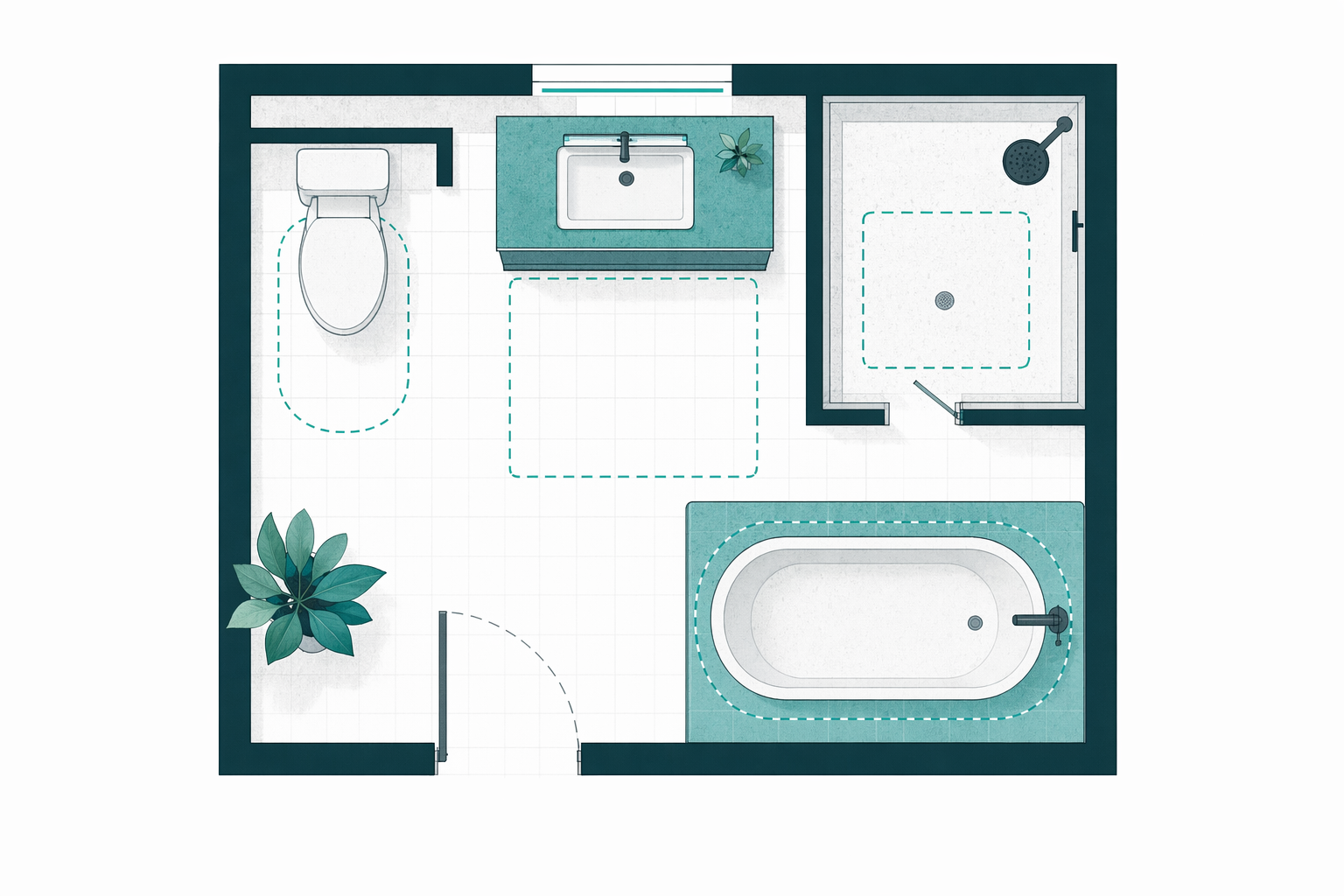
Start with function, not just style
Before you pick tile or a vanity color, look at how the room needs to work. A smart layout makes cleaning easier, helps the room feel bigger, and can prevent expensive changes later.
A few truths homeowners learn the hard way:
- Moving plumbing usually costs more than keeping the toilet, tub, or shower close to the current location.
- Tile and labor are often major cost drivers, but layout mistakes can create added framing, plumbing, electrical, and repair costs.
- Leaks often start behind the pretty finishes. A layout that squeezes a shower into the wrong spot or ignores waterproofing details can cause real damage later.
Typical remodel ranges are broad. A minor refresh may run about $3,000-$10,000, a mid-range remodel often falls around $10,000-$25,000, and a full gut can land around $25,000-$50,000+. A tub-to-shower conversion is often roughly $4,000-$12,000. Real price depends on the size of the bathroom, the scope of work, the tile and fixtures, hidden moisture or framing damage, and your area.
If you are still deciding what kind of project makes sense, see full bathroom remodel options and compare them to your space and budget.
The spacing basics that matter most
You do not need to memorize every code book detail, but you should know the basic clearances that make a bathroom usable. Local rules can vary, so follow local permits and building code, and have licensed, insured, and bonded remodelers confirm the plan.
Here are practical rules of thumb homeowners can use when sketching a layout:
- Toilet side clearance: try to allow at least 15 inches from the toilet centerline to each side wall or fixture. More feels better.
- Clear space in front of the toilet: aim for at least 21 inches, though more is usually more comfortable.
- Vanity standing room: try for at least 30 inches of open floor space in front of the vanity so people can stand, open drawers, and move around.
- Shower entry room: make sure the door or opening has enough landing space so you are not stepping directly into a toilet or vanity corner.
- Tub access: leave enough room to step in and out safely and to clean around it.
- Door swing: the bathroom door should not crash into the toilet, vanity, or a person standing at the sink.
- Walkway width: if two fixtures face each other, leave enough space so the room does not feel pinched.
These are not a substitute for code review or contractor judgment. They are a homeowner's first filter. If your sketch already feels tight on paper, it will feel tighter in real life.
When showers are part of the plan, also read waterproofing explained. Pretty tile is not waterproof by itself. The real protection is behind the tile.
How to lay out a small bathroom without making it worse
Small bathrooms punish bad decisions fast. One oversized vanity, one badly placed toilet, or one thick shower curb can make the whole room feel wrong.
Use this simple process:
- Measure the room as it exists. Note wall lengths, ceiling height, window location, door swing, and where the plumbing stack and drain lines likely are.
- Mark what cannot easily move. Exterior walls, windows, major venting, and structural framing often limit your options.
- Place the toilet first. It is one of the hardest fixtures to relocate cheaply.
- Choose the shower or tub size honestly. Bigger is not always better if it steals needed floor area.
- Fit the vanity last. Many homeowners buy the vanity they like first, then realize the aisle is too tight.
Good small-room strategies often include:
- A sliding or outward-swinging door if local code and layout allow
- A shallower vanity to open up floor space
- A tub-to-shower conversion when you need easier access or a cleaner layout
- A glass panel or clear shower door to reduce the closed-in feeling
- Large-format tile used thoughtfully to reduce grout lines and visual clutter
For tile planning, porcelain floor tile installed is often around $8-$25 per square foot, depending on tile choice, layout, prep work, and local labor. Fancy patterns, uneven subfloors, or heavy demolition can push costs up. If tile is a big part of your plan, the tile buying guide can help you avoid expensive picks that do not fit the room.
Common layout mistakes that cost people money
The biggest mistakes are usually not dramatic. They are the small planning misses that force change orders, delays, or repairs.
- Ignoring the door swing. The room looks fine until the door hits the vanity edge or blocks the toilet.
- Choosing fixtures before measuring clearances. A deep vanity or long toilet can steal needed space.
- Putting appearance ahead of waterproofing. The shower niche, bench, curb, and corners all need real waterproofing behind the tile.
- Assuming all walls can be moved cheaply. Some walls contain plumbing, wiring, vents, or structural framing.
- Forgetting storage. No storage often means clutter on every surface.
- Not planning for cleaning access. Tight gaps behind a toilet or beside a vanity become dirt traps.
- Skipping written scope details. If the contract does not clearly say what is being moved, rebuilt, waterproofed, tiled, and finished, expect confusion.
Bathroom permits also surprise many homeowners. Moving plumbing, electrical, ventilation, or walls may trigger permits and inspections. Follow local requirements and ask questions early. This guide on bathroom permits explained can help you understand the basics.
Most important: hire licensed, insured, and bonded remodelers, and verify the license and insurance yourself. Get the price and scope in writing before any deposit. Keep final payment until the agreed work is complete.
What to do before you talk to remodelers
You do not need a perfect plan. But you should have enough information to compare bids fairly and spot weak proposals.
Bring these items to the conversation:
- Basic measurements of the room and fixture locations
- Photos of each wall, plus the floor and ceiling
- A simple wish list: keep tub, add shower, more storage, better lighting, easier cleaning, aging-in-place features, and so on
- A realistic budget range based on typical estimates, not wishful thinking
- Questions about waterproofing, permits, and schedule
Ask each remodeler:
- Are you licensed, insured, and bonded, and can I verify it?
- What waterproofing system will be used behind the tile?
- What is included in demolition, prep, tile setting, grout, trim, plumbing fixture installation, and cleanup?
- What happens if hidden moisture or framing damage is found?
- Which permits are expected, and who handles them?
Then compare the proposals line by line. You compare quotes. You choose who to hire. You hold the final payment.
If you want help connecting with contractors after you plan your layout, get matched for free. TileQuarter is a free matching service for homeowners. Participating remodelers pay a flat fee to be listed and matched. We do not remodel bathrooms or give construction advice; we help you compare licensed local pros.
Measure first. Make sure the toilet, vanity, shower, and door all have enough room to work. Keep plumbing where it is when possible, insist on real waterproofing behind the tile, verify licenses and insurance yourself, and get the full scope and price in writing before you hire anyone.