Tub-to-Shower Conversion Cost and Options
A tub-to-shower conversion can make a bathroom safer, easier to clean, and better for daily use. Most projects land around **$4,000 to $12,000**, but the real price depends on bathroom size, layout, tile and fixture choices, hidden damage, and your area.
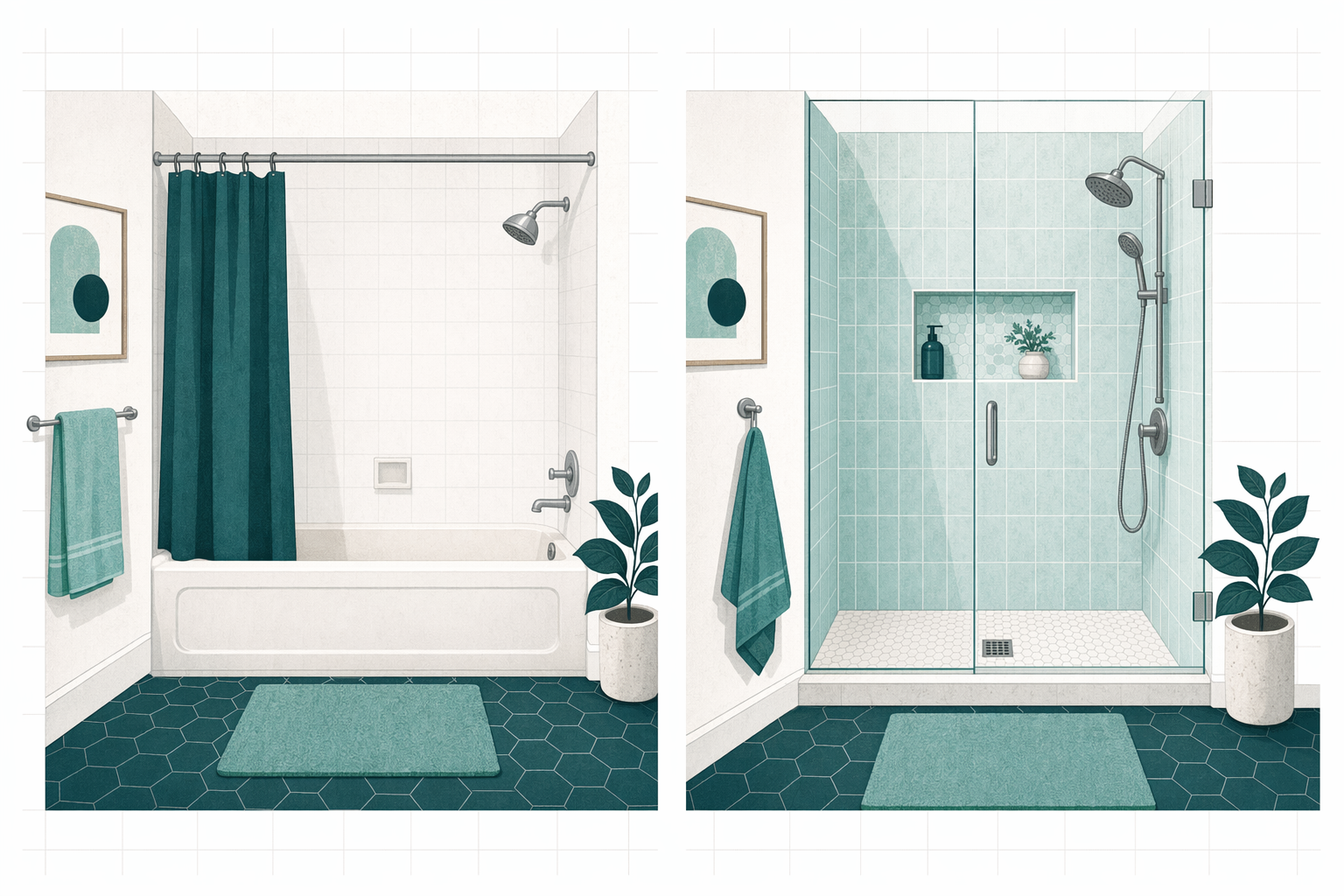
The short answer on cost
If you remove a bathtub and build a shower in the same spot, a typical range is about $4,000 to $12,000. A simple swap with basic wall panels, a standard shower valve, and no layout changes is often on the lower end. A custom tiled shower with a niche, bench, frameless glass, upgraded fixtures, or drain relocation can move well above that.
For context:
- A minor bathroom refresh often runs $3,000 to $10,000.
- A mid-range remodel often runs $10,000 to $25,000.
- A full gut remodel often runs $25,000 to $50,000+.
In many bathrooms, tile and labor are the biggest line items. Installed porcelain floor tile often lands around $8 to $25 per square foot, depending on tile type, prep work, and your market. Shower wall tile can cost more because it takes more labor, cuts, waterproofing steps, and trim details.
These are estimates, not quotes or guarantees. Your real price depends on the size of the bathroom, the scope of work, the tile and fixtures, hidden moisture or framing damage, and your area.
If you want broader remodeling ranges before you talk to anyone, start with costs or get help comparing local options at get matched.
What changes the price most
Two tub-to-shower projects can look similar in photos and still be priced very differently. Here is what usually moves the number.
1. Keeping the plumbing where it is
If the new shower uses the same drain area and the same general water supply location, costs are usually lower. Moving the drain, changing pipe runs, or opening more floor can add a lot.
2. Shower base choice
A prefabricated shower pan or low-threshold base is often less expensive than a custom mud pan with tile. Custom work can look great, but it adds labor and requires excellent waterproofing.
3. Wall finish
Acrylic or composite wall panels are usually faster and cheaper to install. Tile costs more because of backer materials, waterproofing, layout, cuts, grout, trim, and labor. If you are shopping tile, see the tile buying guide.
4. Glass and door style
A basic shower curtain or framed door costs less than a heavy frameless glass enclosure.
5. Extras
Built-in niches, benches, grab bars, handheld sprays, upgraded valves, recessed lighting, heated floors, and custom storage all add cost.
6. Hidden damage
This is the part many homeowners miss. Once the tub comes out, a remodeler may find rot, mold, bad subfloor, leaking pipes, or weak framing. That repair is often necessary before a new shower can go in.
7. Permits and code
Your city or county may require permits, inspections, ventilation updates, or specific safety rules. Follow local permits and building code. You can read more at bathroom permits explained.
A bigger warning: the cheapest shower is not the cheapest if it leaks. Real waterproofing behind the tile matters more than fancy tile on top.
Your main conversion options
A tub-to-shower conversion is not one single product. You have a few common paths.
- Basic conversion with prefabricated base and wall panels
Good for speed, lower cost, and easier cleaning. Often a smart choice for rental units, guest baths, or homeowners who want function over custom looks.
- Tiled shower in the tub footprint
This gives you the most design flexibility. You can choose tile size, pattern, niche placement, curb or curbless style, and trim finishes. It usually costs more because labor is higher and waterproofing must be done carefully.
- Low-threshold or accessible shower
This can be easier to enter and safer for aging in place. Common upgrades include grab bars, a handheld shower, a built-in seat, slip-resistant flooring, and a wider opening. If accessibility matters, review accessible bathrooms.
- Tub-shower combo replacement instead of full conversion
Sometimes the best move is not removing the tub at all. In a home with only one bathroom, keeping at least one tub can matter for resale or small children.
Before you decide, think about daily use:
- Do you actually take baths now?
- Is this your only bathroom?
- Will an older parent use it?
- Do you need easier cleaning?
- Do you want a shower door, or is glass not worth the extra cleaning and cost?
If your project may expand beyond the tub area, it helps to compare it against a full bathroom remodel instead of pricing the shower in isolation.
Where people get burned
Homeowners usually regret the same few things.
- Skipped or sloppy waterproofing
Tile and grout are not the waterproof layer. The waterproof layer belongs behind the tile or directly under the tile system, depending on the assembly. Ask exactly what waterproofing system will be used and where it goes. Learn the basics at waterproofing explained.
- Vague scope of work
"Replace tub with shower" is too vague. Get the scope in writing before any deposit. It should list demolition, disposal, plumbing work, substrate repair, waterproofing system, shower base or pan, tile area, grout, niche, valve, trim, glass, paint touch-up, cleanup, and who handles permits.
- Low bid, expensive change orders
A very low estimate can mean important work was left out. Ask what is excluded. Ask what happens if hidden moisture or framing damage is found.
- No license or insurance check
Hire licensed, insured, and bonded remodelers, and verify the license and insurance yourself. Do not rely only on a business card or text message.
- Paying too much too soon
Do not hand over the full price up front. Hold the final payment until the agreed work is done and you have checked it.
Good remodelers will explain the process clearly. They will not get annoyed when you ask how the shower will be waterproofed.
What to do next
Use this simple plan to stay in control.
1. Decide your must-haves
Write down what matters most: lower step-in height, easy cleaning, tile look, glass door, bench, niche, grab bars, better lighting, or keeping cost down.
2. Set a realistic budget range
For many homeowners, that means planning around $4,000 to $12,000 for the conversion itself, with extra room in case hidden damage is found.
3. Get multiple written estimates
Compare at least 2 to 3. You compare the estimates. You choose who to hire.
4. Ask the right questions
- Are you licensed, insured, and bonded?
- Who pulls permits if needed?
- What waterproofing system will be used?
- What is included in demolition and disposal?
- What happens if rot or subfloor damage is found?
- How long will the bathroom be out of service?
5. Verify before signing
Check license status and insurance yourself. Make sure the written scope and price match what you discussed.
TileQuarter is a free matching service for homeowners. We do not remodel bathrooms or give construction advice. We help you compare local licensed and insured remodelers, and you stay in charge of the decision. If you are ready, start at get matched or explore shower project ideas at shower and tub.
Plan on about $4,000 to $12,000 for a typical tub-to-shower conversion, then compare 2 to 3 written estimates from licensed, insured, and bonded remodelers. Verify license and insurance yourself, insist on real waterproofing behind the tile, and do not make final payment until the agreed work is done.