Vanities & storage
A new vanity or better storage can make a bathroom work better without changing the whole room. The real cost depends on the bathroom size, the scope of work, the vanity and top you choose, hidden moisture or framing damage, and your area.
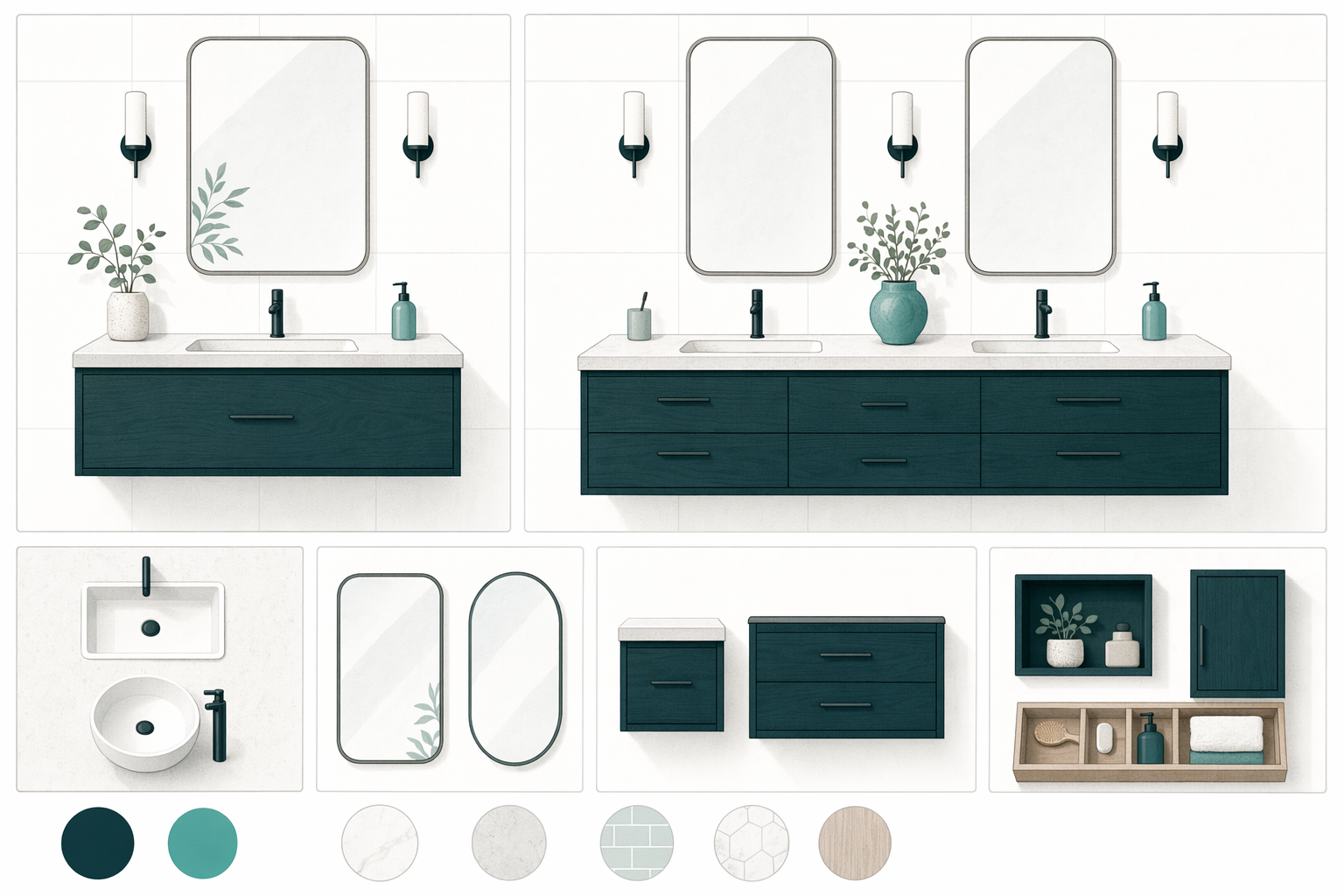
What this service covers
Bathroom vanities and storage projects can be simple or part of a bigger remodel. Some jobs are just a swap. Others need new flooring cuts, wall repair, lighting changes, or moving plumbing.
Typical work may include:
- Replacing an old vanity with a new one in the same location
- Installing a new countertop, sink, faucet, mirror, or medicine cabinet
- Adding linen cabinets, recessed niches, shelving, or drawer organizers
- Upgrading to double sinks if the room has enough space
- Improving storage in small bathrooms with wall-mounted or shallow-depth vanities
The cheapest jobs usually keep the plumbing where it is. Costs rise fast when you move drains, water lines, outlets, or lights. Tile and labor are often the biggest line items in a bathroom, so if the vanity change affects floor tile or wall tile, expect the price to go up.
If your vanity project is really part of a larger update, see full bathroom remodel options. If the floor or wall tile will be disturbed, tile and flooring may also be part of the scope.
How TileQuarter works
TileQuarter is a free matching service for homeowners. We do not remodel bathrooms, design bathrooms, pull permits, or give construction, plumbing, electrical, waterproofing, legal, or financial advice.
Here is how it works:
1. Tell us about your project. Basic details help, like bathroom size, whether you want a single or double vanity, if plumbing stays in place, and what storage you need.
2. We match you with licensed and insured bathroom remodelers who serve your area. Homeowners do not pay for the match.
3. You compare estimates, scope, timeline, and materials. You choose who to hire.
4. Before any deposit, get the price and scope in writing. Make sure the written scope says exactly what is included: vanity, top, sink, faucet, backsplash, mirror, disposal of old materials, touch-up paint, and any tile or wall repair.
Always hire licensed, insured, and bonded remodelers and verify the license and insurance yourself. Follow local permits and building code. If your project touches wet areas, insist on real waterproofing behind tile, not just grout and caulk. This guide can help when you compare companies: how to vet a bathroom contractor.
Typical cost ranges
These are typical ranges and estimates, not quotes or guarantees.
For many homeowners, a vanity and storage project falls somewhere in these rough ranges:
- Basic vanity replacement: about $800-$3,500 if you keep the same footprint and plumbing location
- Mid-range vanity upgrade with top, sink, faucet, mirror, and minor wall or floor repair: about $2,500-$7,500
- Double vanity or semi-custom storage project: about $4,000-$12,000+
- Part of a larger bathroom refresh: total room costs are often $3,000-$10,000 for a minor refresh, $10,000-$25,000 for a mid-range remodel, and $25,000-$50,000+ for a full gut
A few line items that move the number:
- Stock vanity vs. semi-custom or custom cabinetry
- Cultured marble or laminate top vs. quartz, granite, or solid-surface top
- One sink vs. double sink
- Keeping plumbing in place vs. moving supply and drain lines
- Whether the old vanity hid damaged drywall, soft subfloor, mold, or rot
- Whether flooring must be patched because the old vanity footprint was different
- Delivery, carry-up, disposal, and finish carpentry work
Some material-only examples homeowners see in the market:
- Stock single vanity: often $300-$1,500
- Quartz or stone top: often $500-$2,000+ depending on size and edges
- Faucet: often $100-$500+
- Medicine cabinet or mirror: often $100-$800+
- Porcelain floor tile installed: often around $8-$25 per sq. ft.
If you want help understanding bathroom budgets more broadly, start with bathroom remodel costs.
Timeline and what can slow it down
A simple vanity swap can sometimes be done in 1-2 days once materials are on site. A more complete project with storage, top fabrication, tile repair, painting, and inspections can take several days to 2+ weeks.
Common delays:
- Vanity or countertop on backorder
- Custom tops that need measuring, fabrication, and a return visit for install
- Hidden water damage behind the old vanity or in the floor
- Plumbing that is not centered where the new vanity needs it
- Permit or inspection timing when required by your city or county
Good planning helps. Before work starts, confirm:
- Exact vanity width, depth, and height
- Door swing and drawer clearance
- Outlet and light locations
- Who disconnects and reconnects plumbing
- Who patches drywall, paint, trim, and flooring
- Whether permits are needed in your area
Permit rules vary by location and by scope. If plumbing or electrical changes are involved, ask about local requirements and follow code. This plain guide helps homeowners know what to ask: bathroom permits explained.
Best vanity and storage choices for real life
The right vanity is not just about style. It should fit the room, hold what you actually use, and be easy to clean.
Good choices for small bathrooms
- Wall-mounted vanity to make the room feel larger
- 18-21 inch depth instead of a deeper cabinet if walk space is tight
- Drawers instead of one big open cabinet, because drawers waste less space
- Recessed medicine cabinet for hidden storage
- Tall, narrow linen cabinet if wall space allows
Good choices for family bathrooms
- Quartz top for lower maintenance
- Full-extension drawers with organizers
- Toe-kick drawers or pull-outs for hair tools and cleaning supplies
- Double sinks only if there is still enough counter space and elbow room
Good choices for aging in place or accessibility
- Open knee space below the sink where needed
- Easy-grip hardware
- Good task lighting at the mirror
- Storage that can be reached without bending too far
If accessibility matters, review accessible bathrooms before you choose a vanity layout.
One more practical tip: if a vanity sits next to a shower or tub, moisture control matters. Caulk alone is not waterproofing. If the project affects tiled wet areas, ask exactly what waterproofing system will be used behind the tile and where it starts and stops. This is where many bathrooms fail: waterproofing explained.
Pros, cons, and where homeowners get burned
A vanity-and-storage upgrade can be a smart project, but only if the scope is clear.
Pros
- Faster and cheaper than a full remodel in many cases
- Better daily function with more drawers, shelving, and counter space
- Can improve resale appeal if the bathroom looks dated
- Often less disruption if plumbing stays in place
Cons
- Cheap vanities can swell, peel, or rack out of square in humid bathrooms
- Bigger vanity does not always mean better storage if doors and drawers are poorly planned
- Moving plumbing can turn a simple job into a much more expensive one
- New vanity dimensions can expose unfinished flooring or damaged walls
Where people get burned
- They buy the vanity first and measure later
- They assume the countertop, sink, faucet, mirror, demo, and disposal are all included when they are not
- They skip license and insurance checks
- They pay a large deposit before getting the exact scope in writing
- They ignore signs of leaks, soft floors, or swollen trim around the old vanity
Protect yourself:
- Verify license, insurance, and bond yourself
- Get model numbers and materials in writing
- Confirm who is responsible for permit compliance when needed
- Hold final payment until the punch list is done and everything works
What to ask before you hire
Use these questions when you compare remodelers:
- Are you licensed, insured, and bonded, and can I verify it?
- Have you done vanity replacements like mine, including any plumbing or tile repair?
- Will the plumbing stay in place, or does it need to move?
- What exactly is included in the written scope?
- Who supplies the vanity, top, sink, faucet, and mirror?
- If you remove the old vanity and find moisture damage, how is that handled and priced?
- Will flooring, baseboards, drywall, paint, and trim be patched if the old footprint shows?
- Are permits needed for this scope in my area?
- What is the expected timeline once all materials arrive?
- What deposit is required, and what are the payment milestones?
The safest approach is to compare at least a few written estimates, not just the total price. Compare the scope, the materials, the exclusions, and how each company handles hidden damage.
When you are ready, you can get matched for free and compare local remodelers yourself.
A vanity project can be affordable if you keep the plumbing where it is and spell out the full scope in writing. Compare licensed, insured, and bonded remodelers, verify their credentials yourself, ask about hidden water damage and permits, and do not make final payment until the work is finished right.